How Is the Ovulation Period Determined?
Knowing your ovulation cycle is crucial to your life as a woman, regardless of whether you’re having trouble getting pregnant or are simply interested in your body. Every month, your body undergoes significant changes, and ovulation is one of the most crucial times that might direct your conception process.
Ovulation tracking helps most women, particularly those who intend to become pregnant, understand their fertility window period and the best days to conceive. hence assisting women in learning about the natural rhythm of their bodies.
Whether your cycle is regular or irregular, we will go into great detail in this article on what ovulation time is, how it works, and how to calculate it.
Ovulation: What Is It?
The ovary naturally releases a mature egg during ovulation. This occurs when the dominant follicle, a fluid-filled sac inside the ovary, ruptures. The fallopian tube’s finger-like ends quickly pick up the egg when it is released into the abdomen. Here, the egg and sperm have the chance to unite and become fertilized.
The third stage of the menstrual cycle is ovulation. It occurs before the luteal phase, when the body gets ready for pregnancy, and after the follicular phase, when the egg is formed. The uterus begins to shed its lining if pregnancy is not achieved; this is known as your monthly cycle.
How Your Menstrual Cycle Is Affected by Ovulation
Your brain sends signals that control ovulation. Gonadotropin-Releasing Hormone (GnRH) is released by the hypothalamus, one area of the brain. The pituitary gland then produces two hormones in response to this hormone (GnRH):
Follicle-stimulating hormone (FSH) and luteinizing hormone (LH)
FSH triggers the follicles in one of the ovaries to begin developing between cycle days 6 and 14. Your ovaries contain a collection of tiny, fluid-filled structures called follicles. There is an immature egg inside each of these structures. One of these follicles fully develops into a mature egg between days 10 to 14.
Ovulation is the process by which the ovary releases this developed egg in response to a sharp increase in LH levels around day 14. In order to prepare your uterus in case the egg is fertilized and pregnancy is started, your body secretes more progesterone after ovulation.
How to Monitor Your Cycle of Ovulation
Ovulation often takes place 12 to 16 days prior to menstruation. This indicates that ovulation occurs for many women between day 11 and day 21 of their cycle (starting on the first day of their most recent menstrual cycle). This time frame is known as the “fertile window” because it is the most likely time to become pregnant if you engage in unprotected sexual activity.
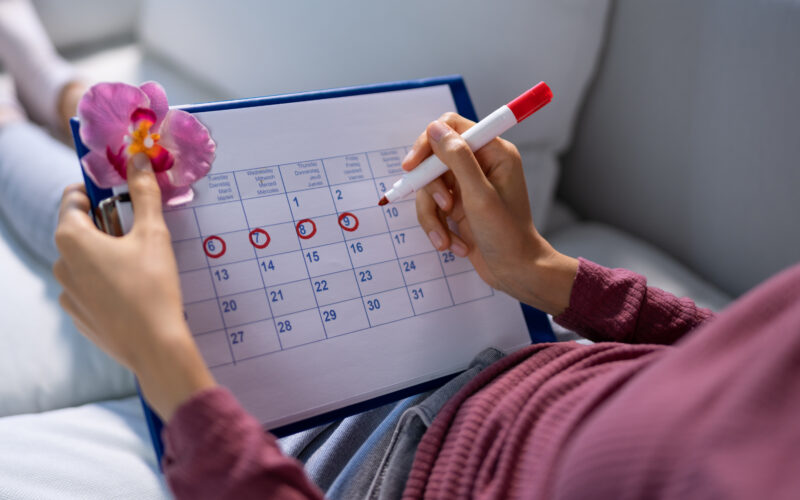
It’s beneficial to monitor your cycle because ovulation doesn’t always occur on the same day every month. You can use a fertility chart, download an app, or manually monitor it on a calendar. You may determine your most fertile period using a variety of free sites.
Learn more about how your ovulation period is calculated here.
How many days does it take to become pregnant during ovulation?
After being discharged, an egg remains alive in your body for almost 24 hours. However, sperm can survive for three to five days inside your body. This implies that having sex up to five days prior to ovulation and on the day of ovulation—even one day beyond ovulation—can result in pregnancy.
It is ideal to have sperm inside your body before to ovulation if you are attempting to conceive. Having sex one to two days prior to ovulation or on the day of ovulation increases your chances of becoming pregnant.
Can Ovulation Be Aided by Medicine?
Ovulation can be aided by some drugs. See your doctor if you want to become pregnant but are having trouble ovulating. Based on your health and objectives, your doctor will evaluate your symptoms and assist you in selecting the best course of action.
To sum up
One of the most important steps in taking charge of your reproductive life is ovulation, whether you’re trying to conceive or simply want to learn more about your own body. Your ability to conceive may actually be significantly impacted if you are aware of your ovulation period, the length of your viable window, and what can cause ovulation to be disrupted.
While most women ovulate correctly, some experience problems because of hormonal imbalances, medical illnesses like PCOS, or other lifestyle reasons. Fortunately, ovulation can be assisted or restored in the majority of cases with the use of monitoring devices and possibly medication under the right guidance.
Do not hesitate to consult a healthcare professional if you are experiencing trouble getting pregnant or are unclear of your cycle. You can feel more confident and ready for parenting if you receive the proper care and instruction.